A website the team can run themselves.
Kaviora Technologies came to us with a clear frustration: every marketing site they'd owned before had frozen on launch day. A new headline, a fresh case study, or a landing page for a campaign all meant a developer ticket and a wait. They wanted the opposite — a fast, design-led website they could actually operate day to day.
The brief was to design the brand in Figma, translate it faithfully into Next.js, and back it with Supabase so that blogs, page sections, and even SEO metadata could be edited from a single admin panel — no code, no redeploy, no dependency on us to publish.

Design-led, but never developer-dependent.
The tension in most content-managed sites is that flexibility comes at the cost of craft. Give a team full editorial control and the design usually drifts; keep the design locked and the team can't move. Kaviora needed both — pixel-faithful to the Figma file on launch, and still fully editable a year later.
That meant treating the front end as a set of typed, composable sections rather than hard-coded pages, and building an admin layer that felt as considered as the public site. The marketing team had to be able to reorder a hero, publish a blog post, and rewrite a page title without ever seeing a line of code.
Figma as truth, Supabase as the backbone.
Figma as source of truth — the entire brand, layout, and component system were designed in Figma first, so the build had a single, unambiguous reference to match against.
Content as data — every website section, blog post, and SEO field lives in Supabase as structured content, not in markup. The Next.js front end simply renders what the database serves.
Autonomy by default — the admin panel was scoped as a first-class deliverable, not an afterthought, so the client owns publishing from day one.
From Figma to production, pixel for pixel.
We designed Kaviora in Figma as a proper component system — reusable sections, states, and tokens — then rebuilt it in the Next.js App Router with a matching component tree. Each Figma section maps one-to-one to a React component, so the production site reads exactly like the design and stays consistent as it grows.
Dynamic blogs run on Supabase with slug-based routing, rich content, and metadata handled per post — the team writes, publishes, and edits entirely from the admin panel. Website sections are equally dynamic: hero, features, and content blocks are stored as records the client can reorder, toggle, and rewrite without a deploy.
Dynamic SEO closes the loop. Titles, descriptions, canonical URLs, and Open Graph data are set per page from the admin panel, so the marketing team controls how every route appears in search and on social — no engineering required.
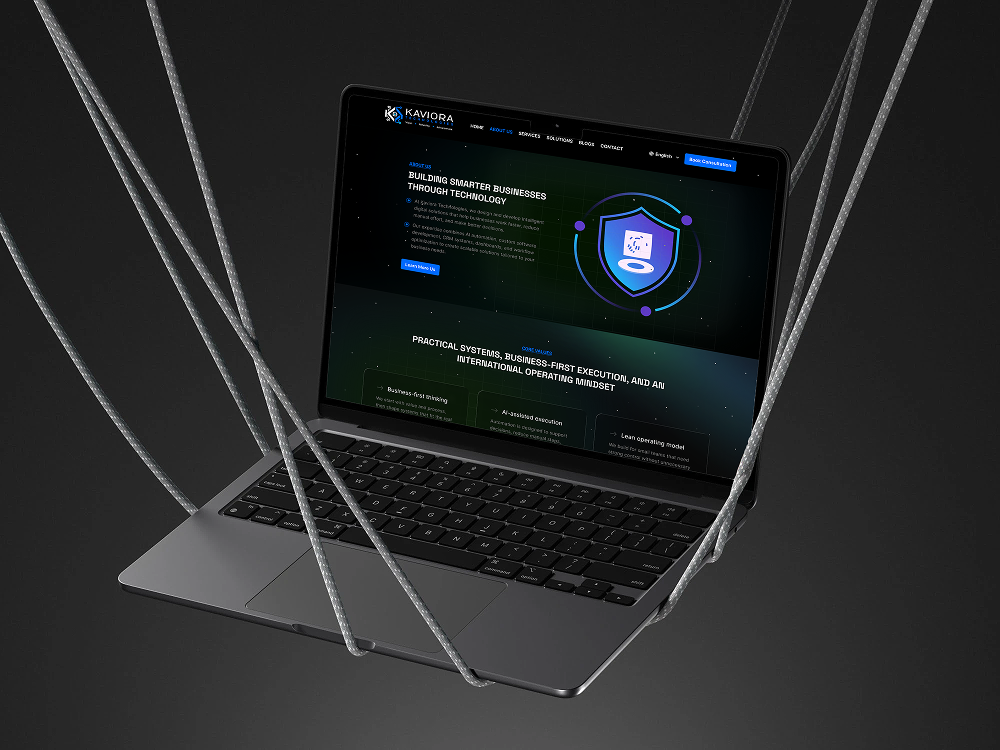
Next.js, Supabase, and a considered admin.
The front end is Next.js on Vercel — server components for fast, SEO-friendly rendering, with content fetched from Supabase. Supabase handles the database, authentication for the admin panel, and storage for media, keeping the whole content layer in one place.
The admin panel was built to feel native to the brand rather than a generic dashboard: clear content models for blogs and sections, live-editable SEO fields, and guardrails that keep non-technical editors from breaking the layout. It's the difference between a CMS the team tolerates and one they actually use.
Marketing that ships without waiting.
Kaviora launched with a site that looks exactly like the Figma design and behaves like a product the team owns. New blog posts go live in minutes, campaign sections are reordered on the fly, and every page's SEO is tuned in-house — all from the admin panel, none of it routed through engineering.
The result is a website that won't calcify. What was previously a queue of developer tickets is now a self-serve workflow, freeing the team to move at the pace of their marketing rather than the pace of their backlog.
Project Gallery