
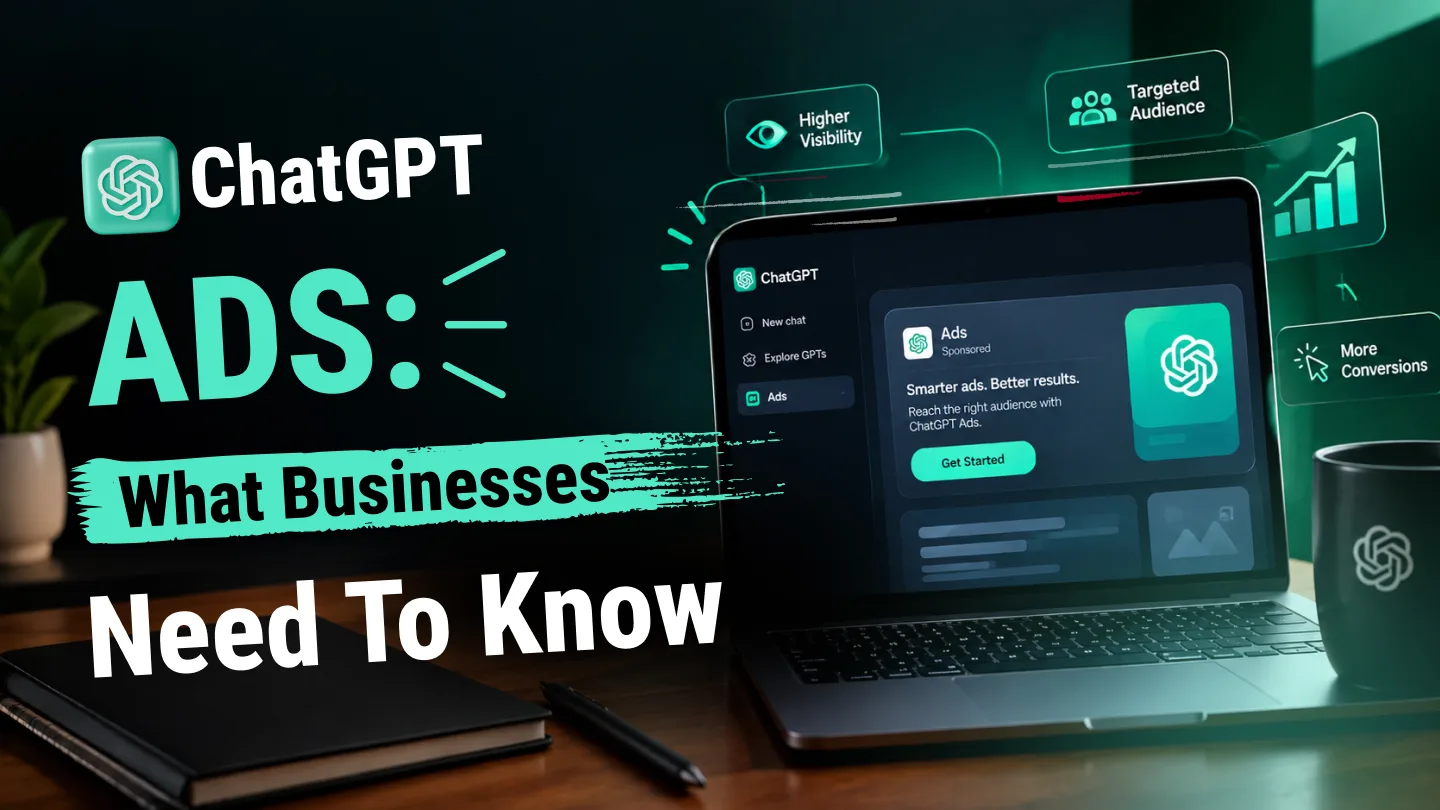
ChatGPT is introducing ads — mostly on its free tier — to fund the huge cost of running at scale. They won't look like search ads or banners; they'll appear as sponsored recommendations woven into the AI's answers, clearly disclosed but contextual. For businesses that means two jobs: be ready to pay to appear where relevant, and, more importantly, be the kind of brand AI already recommends organically. The winners optimise for both — being recommendable makes every ad dollar go further.
ChatGPT reshaped how people ask questions. Instead of typing keywords into Google and scanning ten links, hundreds of millions of people now ask an assistant in plain language: “What's the best CRM for a small design agency?” “Who builds websites for tile exporters?” “Recommend a project management tool under $10 a month.” For years, the answers came back clean — no ads, no sponsored links. That was never going to last.
Running ChatGPT costs an enormous amount, and subscriptions alone can't carry hundreds of millions of free users. Advertising is the obvious way to close the gap — and OpenAI has been steadily building the shopping features, product recommendations, and ad formats to make it happen. If your customers use ChatGPT to decide what to buy and who to hire, you need to understand what's coming.
What ChatGPT ads actually are
Forget the mental model of Google Ads — a labelled list of links at the top of a results page. Ads inside a conversational AI work differently, because there's no page of results. There's one answer.
The emerging model is the sponsored recommendation: when you ask ChatGPT for advice, a paying brand can be surfaced as part of the response — a suggested product, tool, or service that fits your question, clearly marked as sponsored. It's less “here are some ads” and more “here's a relevant option, and this one paid to be shown.”
That distinction matters enormously. In a conversation, an irrelevant ad is jarring and erodes trust in the whole assistant. So ChatGPT ads are pushed toward relevance far harder than search ever was. A brand can't simply outbid its way into an answer where it doesn't belong — the recommendation has to fit, or it damages the product users came for.
Why this is a bigger shift than it looks
Search advertising rewarded whoever bid most on the right keyword. AI advertising rewards whoever is both willing to pay and genuinely relevant to the question. That changes the game in three ways.
- Fewer slots, higher stakes. A search page shows several ads. A ChatGPT answer might name one or two brands. Visibility becomes scarcer and more valuable — there's no page two.
- Context beats keywords. The AI understands the full intent behind a question, not just the words. Being the right answer to a specific need matters more than matching a search term.
- Trust is the currency. Users accept a recommendation because they trust the assistant. Brands that fit that trust get recommended; brands that feel bolted-on get ignored, even when they pay.
Paid placement vs. being recommended
Here's the part most businesses miss. ChatGPT already recommends brands for free — every time it answers “what's the best tool for X,” it names names based on what it has read across the web. Ads are just a way to pay for placement on top of that. So there are two ways to show up:
| Paid (ChatGPT ads) | Organic (AI recommendation) |
|---|---|
| You pay to appear in relevant answers | AI names you because you're a strong fit |
| Stops the moment you stop paying | Compounds over time, keeps working |
| Priced up as competition grows | Free — earned through visibility & trust |
| Needs relevance to convert | Relevance is the reason you're shown |
| Great for demand capture | Great for discovery & credibility |
The businesses that win with ChatGPT ads are the ones already winning organically. If the AI would recommend you anyway, paying to guarantee the slot is cheap and effective. If it wouldn't — if it doesn't understand who you are or has no reason to trust you — then ads are an expensive way to force a bad fit.
How to prepare your business now
You can't buy ChatGPT ads at scale in every market yet — formats and access are still rolling out. But you can do the thing that makes both organic recommendations and future ads work: become the brand AI understands and trusts. This is generative engine optimization (GEO), and it starts today.
1. Answer the questions your customers actually ask AI
People ask assistants specific, intent-rich questions. Publish clear content that answers them directly — comparisons, “best tool for X,” pricing, how-tos. Content written to be quoted by an AI is the raw material recommendations are built from.
2. Make your site machine-readable
Fast, well-structured pages with clean information and schema markup let models parse who you are, what you sell, and who it's for. If AI can't understand your site, it can't confidently recommend you. Our guide to the 2027 website covers what AI-readiness looks like in practice.
3. Build reputation on the sources AI reads
Models weigh third-party signals heavily — reviews, mentions, listings, and coverage on reputable sites. Consistent, positive presence across the web is what tips the AI toward naming you over a competitor.
4. Keep your details consistent everywhere
One clear name, offer, and description across your site, profiles, and directories. Contradictory information makes AI hesitant, and a hesitant AI recommends someone else.
- ChatGPT is adding ads, mainly on the free tier, to fund its scale.
- They appear as sponsored recommendations inside answers — not banners or link lists.
- Relevance and trust matter more than bids; there's no page two.
- Being recommended organically makes any ad spend far cheaper and more effective.
- Prepare now with GEO: answerable content, an AI-readable site, and strong reputation signals.
ChatGPT ads aren't a threat to businesses that are genuinely useful and easy for AI to understand — they're an opportunity. The brands that get ready now, while the formats are still forming, will be the ones AI recommends and the ones ads work best for. If you want your business to be the answer ChatGPT gives, Dezvo helps founders and teams get AI-visible across web, content, and search. Tell us what you're building and we'll help you get found.